
The Clinical Problem
Soft tissue integrity influences timing, safety, and strategy in orthopaedic trauma care.
Despite its importance, soft tissue assessment remains:
- subjective
- variable between clinicians
- difficult to communicate
- difficult to document consistently
A critical part of trauma decision-making still depends on “clinical feel”.
This is the unmet need that quantification addresses.


The Opportunity: Quantifying Soft Tissue
Soft tissues deform in predictable ways under controlled pressure.
This behaviour reflects their physiological condition and can carry clinically relevant information.
Quantifying this behaviour creates:
- a measurable value instead of subjective feel
- structure in assessment
- a reference point for communication
- a starting point for objective documentation
This is the scientific basis for Compressibility.
A measurable transition between two states of tissue behaviour.
How Compressibility Is Quantified
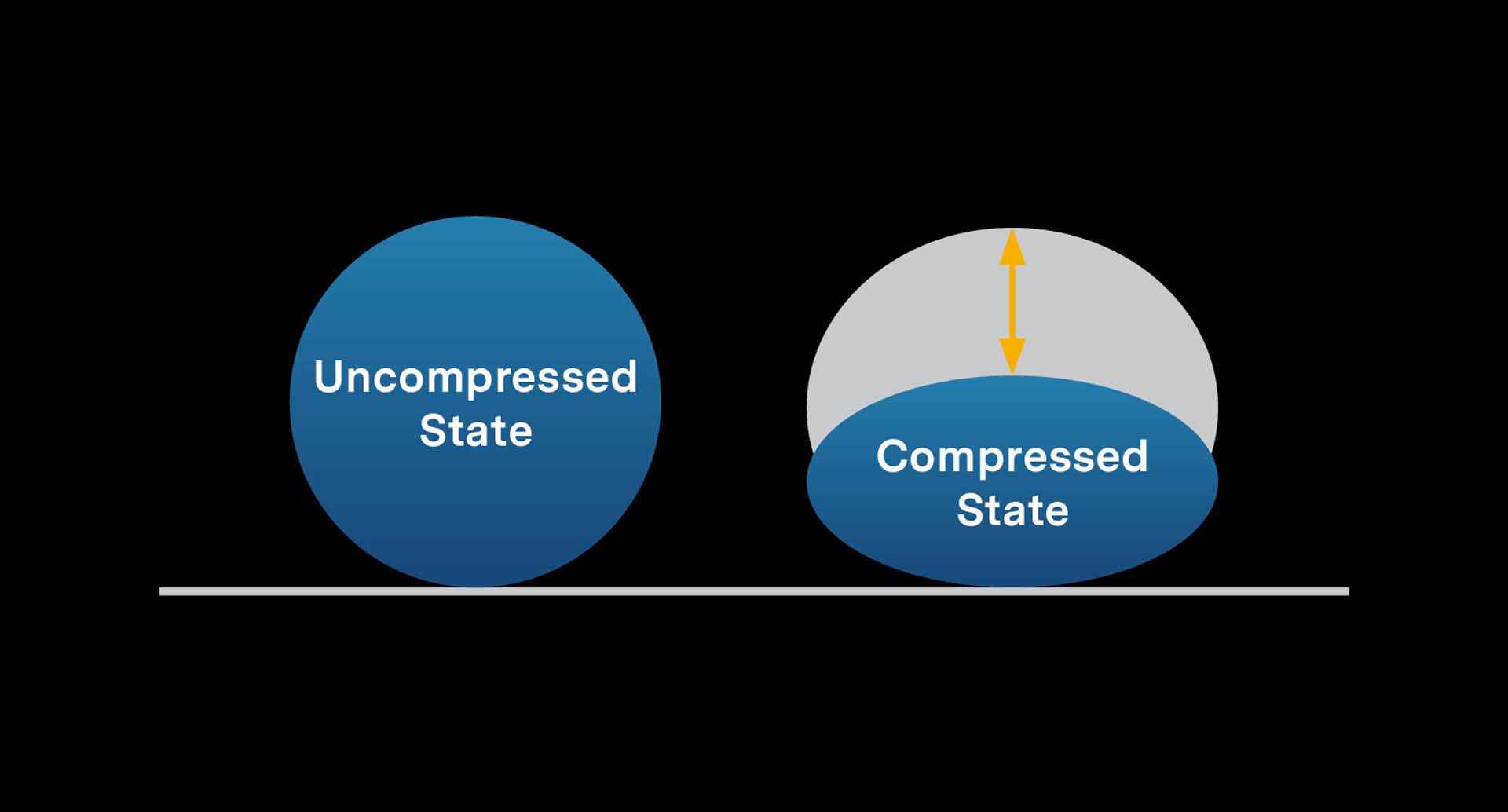
Compressibility describes how soft tissue moves from:
Uncompressed State → Compressed State, under a defined external pressure.
This transition contains mechanical information that can be measured.
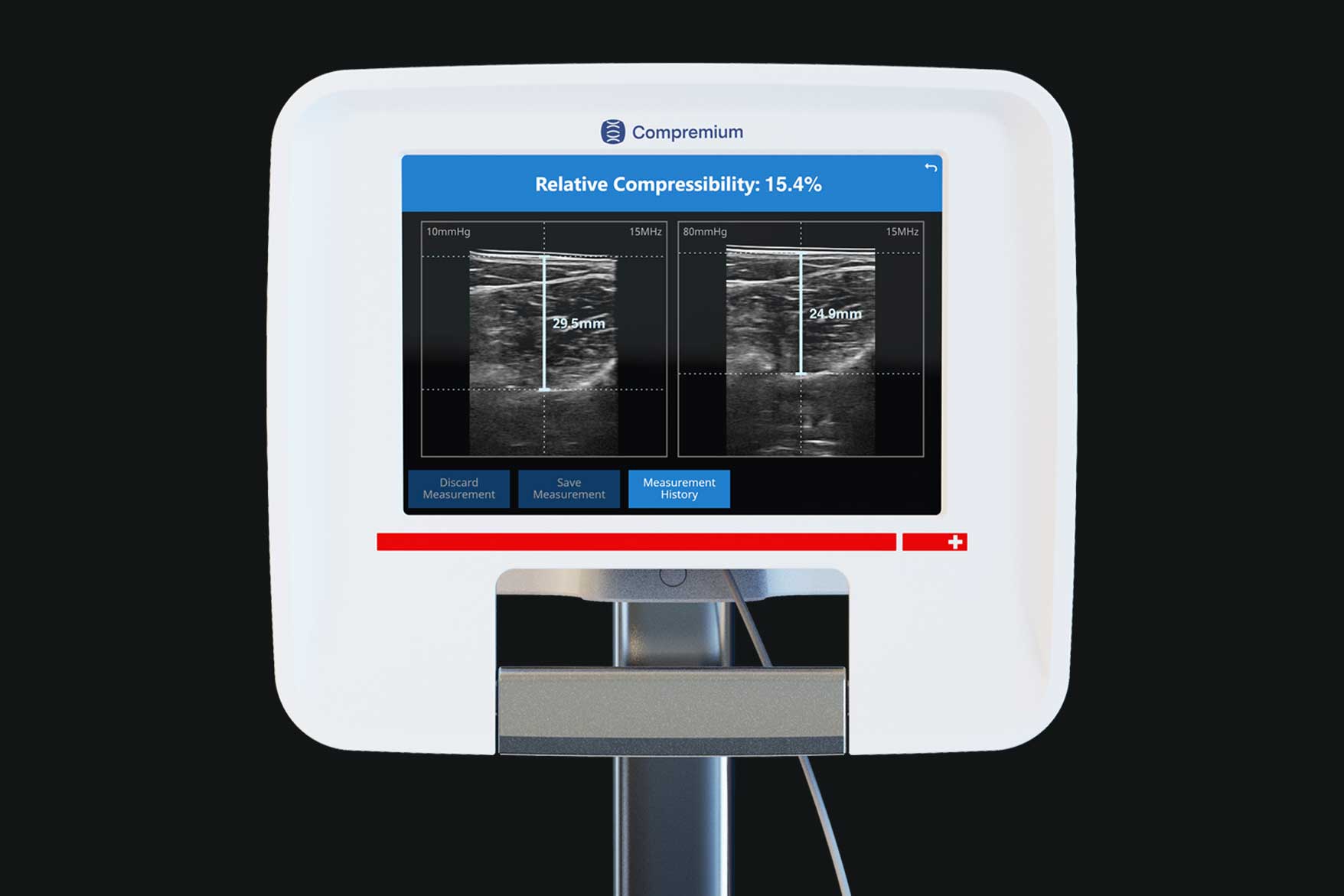
By capturing the displacement between an uncompressed state and a compressed state, this mechanical behaviour can be transformed into a relative percentage.
This is the basis of the CP Value, a relative measure derived from published research (Sellei et al., 20211; Marmor et al., 20212; Novak et al., 20223).

The CP Value
A relative measure of mechanical behaviour
The CP Value expresses:
higher value → greater mechanical displacement
lower value → reduced displacement
higher value → greater mechanical displacement
lower value → reduced displacement
It is a standardised behavioural metric, not a diagnostic parameter.
Published research has reported that significantly reduced CP Values were associated with compromised compartments(1).
Clinical interpretation of CP Values comes solely from scientific literature.
Compremium does not claim any diagnostic ability.
A method used in research to compare compartments.
The CP Quotient
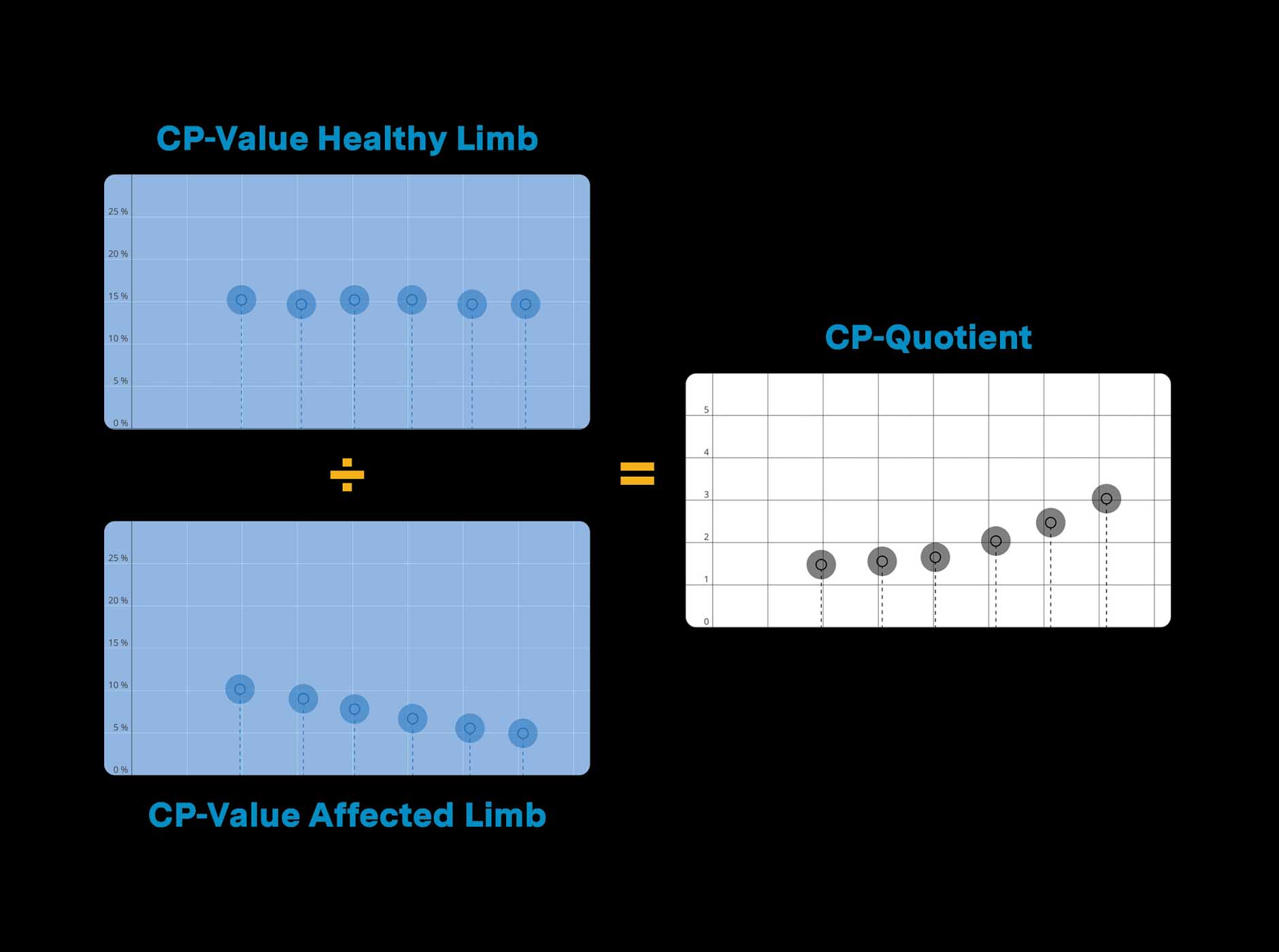
The CP Quotient is defined in literature as:
CP Quotient = CP Value (Healthy Limb) ÷ CP Value (Affected Limb)
This ratio helps describe mechanical differences between compartments in the same patient.
Published work has shown that CP Quotient values increase in compromised compartments in experimental and pilot clinical settings(1&2).
Again, these interpretations belong to the research domain, not the solution.

Evidence Supporting Compressibility as a Scientific Metric
Findings from laboratory and clinical studies
Published studies have shown:
Strong correlation between controlled-pressure ultrasound measurements and compartment condition(1)
Reliable repeatability and inter-observer consistency in detecting mechanical differences(1+2)
Clear differences between healthy and compromised compartments in experimental models(1)
Feasibility of detecting elevated compartment conditions in early clinical settings(2)
These findings establish compressibility as a scientifically meaningful parameter.
Note: All interpretations are taken directly from research literature, not from Compremium.

Why Quantification Matters for Ortho Trauma Care
Measurement adds objectivity and clarity over subjectivity.
Quantification of Soft Tissue supports clinicians by providing:
- an objective measurement for documentation
- a repeatable method for re-assessment
- a standardized value for communication
When surgeons understand the science, they naturally see the value of the solution that can measure it.

“This new method objectifies and specifies the clinical findings and thus has the potential to eliminate the need for any invasive measurements of suspected ACS.”
Prof. Dr. med. Richard Martin Sellei, Chief Physician, Clinic for Trauma Surgery and Orthopedic Surgery, Sana Klinikum Offenbach


The unmet clinical need, now met
The science is the WHY
The Compremium Quantis ST is the HOW.
Compressibility, CP Value, CP Quotient, the formula, the evidence, these concepts come from scientific literature.
What Compremium created is an FDA-Cleared and CE-Marked solution capable of:
- enabling quantification at the point of care
- capturing compressibility in real time
- producing CP Values safely and consistently
This is the engineering breakthrough that brings clarity through quantification into clinical practice.
From Insight to Practice
Compremium is the first to make Quantified Soft Tissue Assessment practical in everyday ortho trauma workflows.
With CE marking, FDA clearance, and a standardized protocol, the Compremium Quantis ST brings this measurable insight into real clinical use.
1. Sellei RM, et al. Non-invasive and reliable assessment of compartment elasticity by pressure-related ultrasound: An in-vitro study. Injury. 2021;52(4):724–730.
2. Marmor M, et al. A dual-sensor ultrasound-based method for detecting elevated muscle compartment pressures: A prospective clinical pilot study. Injury. 2021;52(8):2166–2172.
3. Novak, REVIEW OF NON-INVASIVE TECHNOLOGY TO DETECT ACS, Extremity compartment syndrome: A review with a focus on non-invasive methods of diagnosis, 2022
2. Marmor M, et al. A dual-sensor ultrasound-based method for detecting elevated muscle compartment pressures: A prospective clinical pilot study. Injury. 2021;52(8):2166–2172.
3. Novak, REVIEW OF NON-INVASIVE TECHNOLOGY TO DETECT ACS, Extremity compartment syndrome: A review with a focus on non-invasive methods of diagnosis, 2022

Swiss engineered
2026 Compremium AG

Follow us on LinkedIn
